Transforming Your Garden Layout with AI: Visualising Patios, Planting, and Outdoor Living
Overgrown turf and awkward slopes make garden redesign difficult to plan. Learn how to assess sunlight, divide outdoor space into practical zones, and test paving materials with AI.
In this guide
Planning Functional Outdoor Living Spaces
Traditional British garden layouts with uniform lawns and perimeter fencing often leave corners neglected. Designing an outdoor space with dedicated zones for dining, seating, and planting creates a practical extension of your home.
Landscape construction is labour-intensive. Excavating clay soil, installing sub-bases (MOT Type 1), and laying paving regularly costs £120 to £250 per square metre. If you lay a patio in a cold, shaded corner where afternoon sun is blocked by a neighbouring wall, correcting the error later is expensive.
Using AI garden design lets you test patio positions, retaining walls, fire pits, and boundary treatments before hiring landscapers or digging foundations.
Visualising your outdoor space prevents laying expensive paving in cold shadow zones and helps you coordinate hard landscaping with natural sunlight patterns.
Sunlight and Aspect: The Foundation of Every Garden Plan
Before designing any patio or lounge terrace, you must determine your garden's solar orientation. The sun's path dictates how and when each part of the garden is best enjoyed:
South-Facing Gardens: Receive light throughout the day. Shade management is the main priority. Position dining furniture under a pergola or slightly offset to provide relief during summer.
North-Facing Gardens: The area immediately behind the house often remains in shadow. Placing your main dining terrace at the far end of the garden catches late-afternoon and evening sun.
West-Facing Gardens: Receive strong afternoon and evening light, making them ideal for an outdoor dining table or fire pit situated directly outside kitchen doors.
East-Facing Gardens: Bright in the morning and shaded by late afternoon. A breakfast seating nook near the house paired with an evening drink bench at the rear works best.
The 3-Zone Layout Principle for Medium and Long UK Gardens
Long, narrow plots often feel like corridors. Dividing the space into three functional zones breaks up long sightlines and makes the garden feel wider:
Zone 1 (Dining and Cooking Terrace): Positioned directly outside kitchen doors, laid with flush porcelain paving for level access.
Zone 2 (Planting and Lawn Transition): A reduced lawn, stepping-stone path, or raised planters that add depth and greenery.
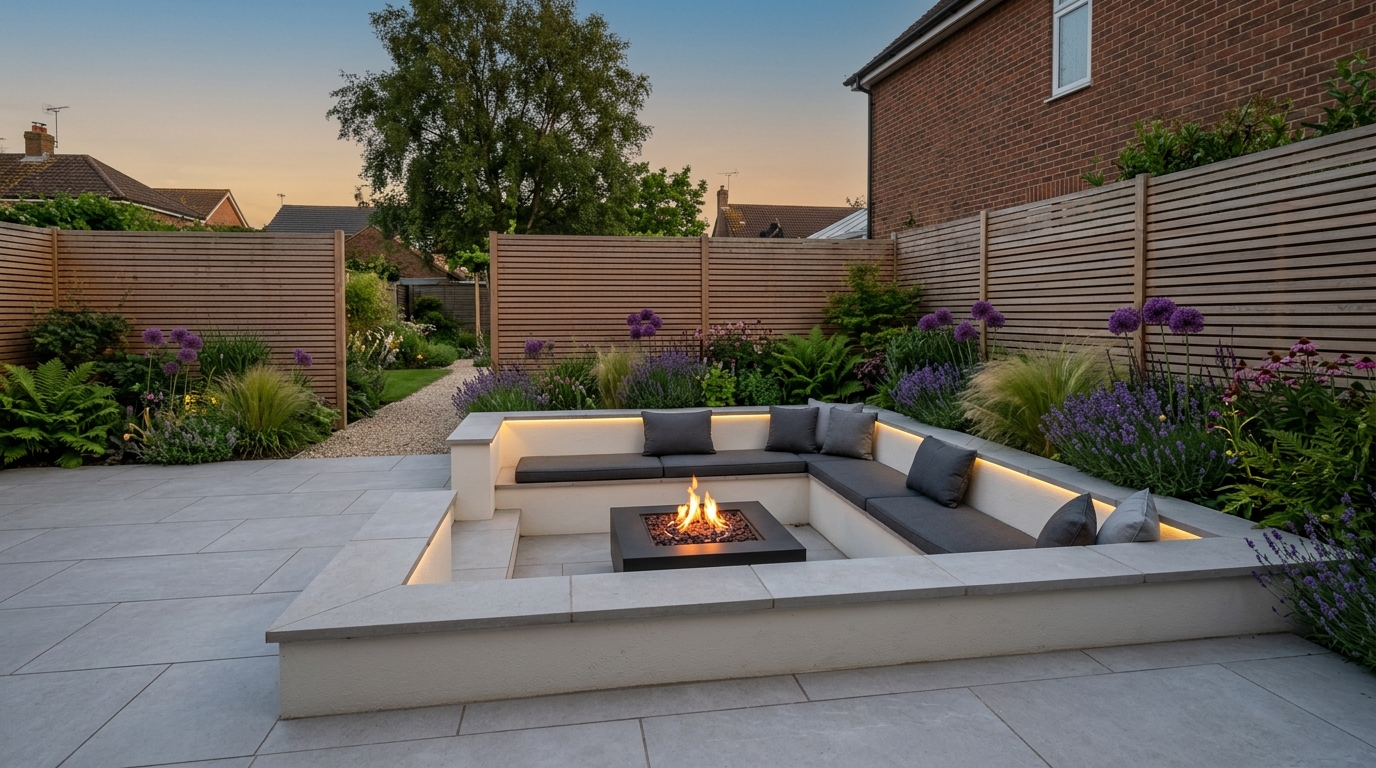
Zone 3 (Evening Retreat): A secluded seating area, timber pergola, or fire pit positioned to catch the last rays of sunlight.
| Paving Material | Pros & Aesthetic | Slip Rating & Durability | Installed Cost (£/m²) |
|---|---|---|---|
| 20mm Vitrified Porcelain | Ultra-contemporary, non-porous, highly resistant to moss and algae | R11 anti-slip rating, scratch-proof, zero colour fading | £140 to £220/m² installed (requires slurry primer and rigid base) |
| Riven Indian Sandstone | Traditional textured surface with warm natural earth tones | Porous; prone to black spot lichen unless sealed regularly | £90 to £150/m² installed (cost-effective classic choice) |
| Capped Composite Decking | Warm timber look, splinter-free, excellent for sloping ground | Low maintenance, rot-free, but can retain surface heat in sun | £130 to £200/m² installed (requires timber or aluminium subframe) |
Boundaries, Screening and Atmospheric Night Lighting
Boundary fencing is often treated as an afterthought, yet fences occupy more vertical visual area than your patio. Horizontal cedar or larch slatted panels visually widen compact gardens and offer clean lines.
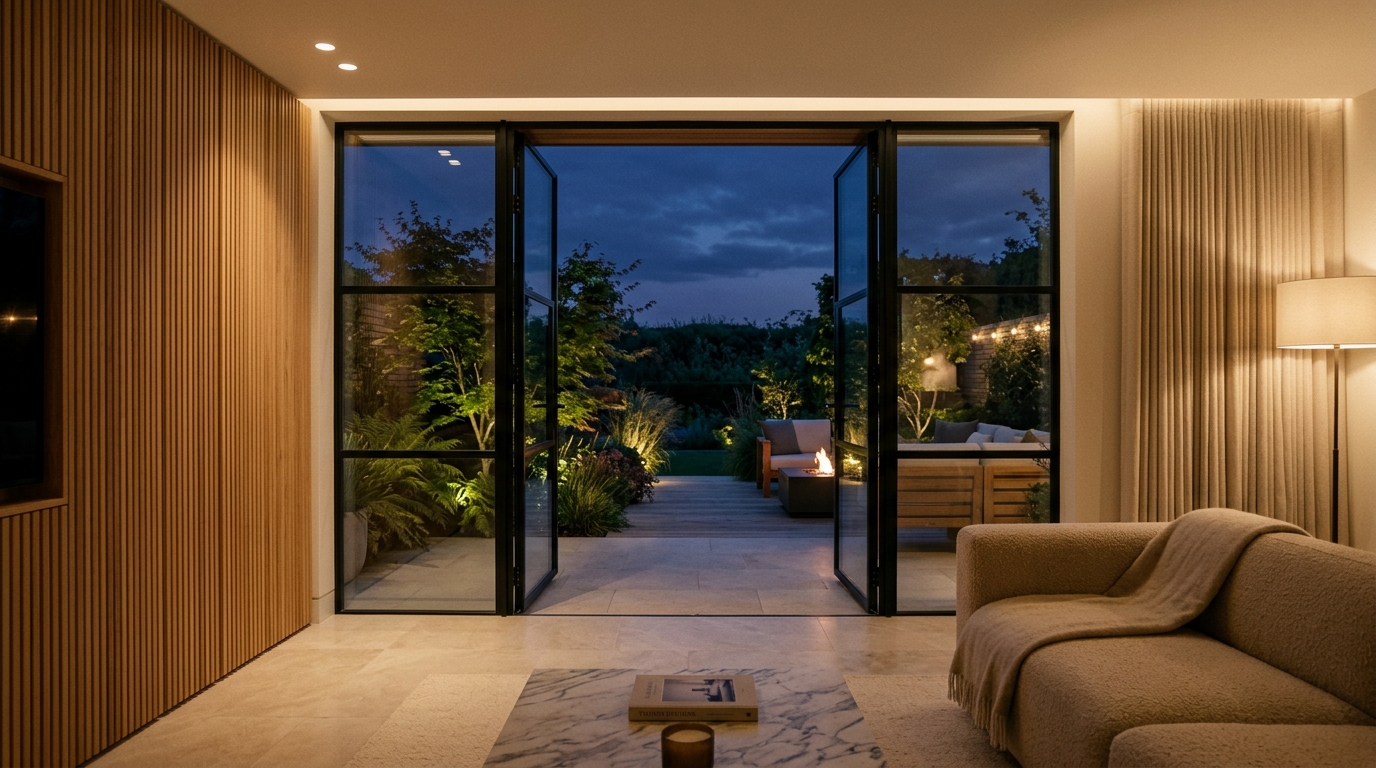
To extend garden use into the evening, install low-voltage warm LED lighting (2700K). Avoid harsh security floodlights in favour of subtle under-lip bench lighting, spike lights uplighting architectural foliage such as Japanese maples, and warm festoon lighting overhead.
Frequently Asked Questions
Reimagine Your Outdoor Space Today
Upload a photograph of your garden or patio and explore stunning outdoor living layouts in minutes.
Related Design Guides
View all guides